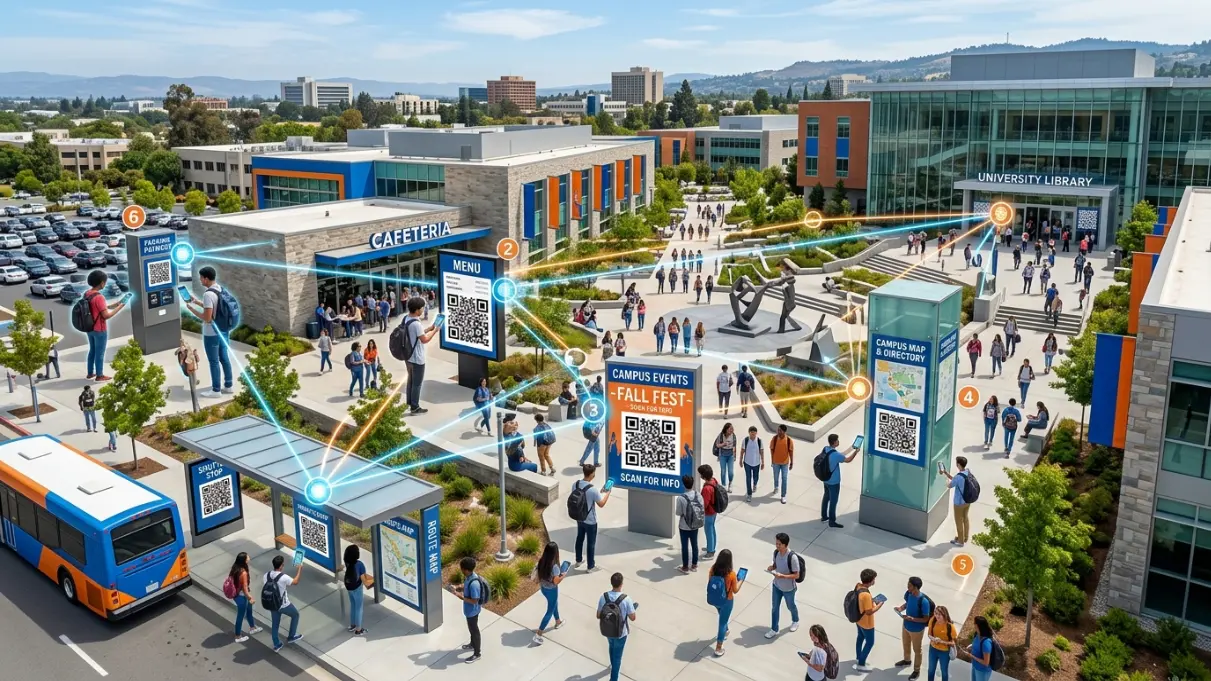
In today's hyper-connected world, QR codes have become a ubiquitous bridge between physical and digital experiences. Yet, despite their widespread adoption, not every QR code gets scanned. Why do some codes drive massive engagement while others are ignored? The answer lies not in technology, but in human psychology.
The Trust Factor: Why Scanning Feels Risky
When a user sees a QR code, their brain instantly evaluates risk versus reward. Unlike clicking a visible hyperlink, scanning a QR code requires downloading data from an unknown source. This triggers what psychologists call "uncertainty avoidance" — a natural hesitation toward ambiguous situations. Users worry: Will this lead to a malicious site? Will my data be stolen? Is this worth my time?
To overcome this barrier, successful QR campaigns prioritize transparency. Adding a short, clear call-to-action like "Scan to view our menu" or "Scan for exclusive 20% off" reduces ambiguity and increases perceived value. Context matters immensely: a QR code on a restaurant table feels safe; the same code on a random street poster may raise suspicion.
The Curiosity Gap: Leveraging Human Nature
Humans are wired for curiosity. When we see an incomplete puzzle or a hidden reward, our brains release dopamine in anticipation of resolution. Smart marketers use this "curiosity gap" to drive scans. Instead of "Scan for more info," try "Scan to unlock a secret discount" or "Scan to see what's behind the code."
However, this tactic requires authenticity. If the reward doesn't match the promise, users feel manipulated — damaging trust and reducing future engagement. Always deliver on your QR code's promise, and make the post-scan experience seamless.
Frictionless Experience: The 3-Second Rule
Research shows that users decide whether to scan a QR code within 3 seconds. If the code is hard to find, poorly contrasted, or placed in an awkward location, they'll move on. Psychological principles of visual hierarchy apply: make your QR code prominent, add whitespace around it, and ensure it's at eye level or within easy camera reach.
Mobile usability is equally critical. If the landing page loads slowly, isn't mobile-optimized, or requires unnecessary form fields, users abandon the experience. Every extra step reduces conversion by approximately 20%. Optimize for speed, simplicity, and mobile-first design.
Social Proof and FOMO
People look to others for behavioral cues. Adding subtle social proof near your QR code — "Join 10,000+ customers who scanned this week" or "Limited-time offer: 24 hours left" — taps into both conformity and fear of missing out (FOMO). These psychological triggers can significantly boost scan rates without feeling manipulative.
The Reward Principle: Immediate Value Wins
Behavioral economics teaches that immediate rewards are more motivating than delayed ones. A QR code offering instant access to a discount, exclusive content, or useful information will outperform one promising future benefits. Make the value proposition clear, immediate, and easy to redeem.
Conclusion: Design for the Human, Not Just the Device
QR codes are more than technical tools — they're psychological touchpoints. By understanding trust, curiosity, friction, social proof, and reward timing, you can craft QR experiences that people genuinely want to engage with. At thecodeqr.com, we believe the best QR strategies start with empathy for the user. Scan smarter, not harder.